The goal of this article is to give a brief overview of the development in arms and armor during the middle ages. That is, I won’t go into detail here, and much is to be said about every single thing here, more images could be included and more sites linked. But the goal is to not bombard people with information only vaguely aware of the medieval arms and armor repertoire - people who have largely been influenced by movies, series and horrible documentaries. Hence I’ve included images to show visually the development of not only technology but also the aethetics over the time, as well as links to websites and Youtube videos (furher below) which can be further explored.
Similarly, I will name “archaeological evidence”, some names and words you can put into your preferred search-engine and continue with an auto-didactic approach.
Important Information
It is important to keep in mind that all developments of armor and weapons required also some development in the crafts and arts. Hardened steel development fairly late, the craftsmanship required to create large plates of steel with variable thickness and while being light enough for a man to wear and fight in is not trivial, while alleged cheaper and simpler methods, such as gambeson (layered linen) did not appear for most of the middle ages despite the technology and material to create these being abundant.
Mass production of plate and maille (we are talking about close to hundreds of thousands of full sets of plate armor per annum in the shops of Northern Italy and some German and French cities) required not just materials, bloomeries, water-powered grinding wheels and the knowledge to use these effectively but also a efficient pipelines, manufacturing, and a good putting-out system.
Another important aspect is the artistic: Armor and textile fashion was always interwoven (beautiful cloaks with elaborate brooches over maille, painted-on armor did not only serve decorative purposes but also protect the steel from water. Surcoats, jackets, arming doublets and pourpoint worn underneath and sometimes also over the armor). Some pieces tried to mimic older styles: The Barbute, for example, was inspired by the Corinthian helmet, while the Armour Alla Antiqua appears a lot in painting and frescos. Individual links of maille might have had different colors to create patterns. And so on.. But here I will only talk about the armor itself.
6th Century: Late Antique Influences and Early Migration Period Continuity
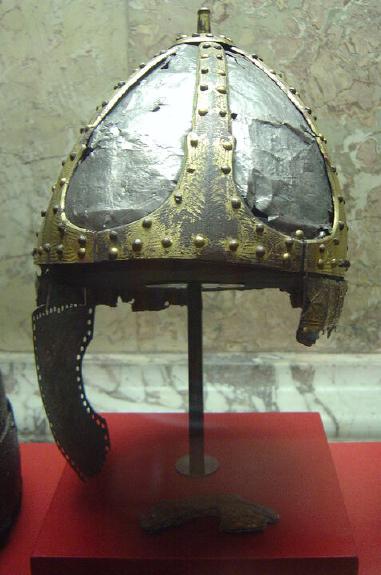
In the 6th century, armor drew heavily from late Roman traditions, with “barbarian” groups (e.g., Franks, Lombards, Anglo-Saxons) adopting and adapting Roman-derived gear - is what many would say. However, the Romans adopted maille armor and the Spangenhelm from the Celts. This is evident from the fact that the earliest findings of maille armor is from 3rd century BC in modern-day Slovakia and Romania. Body armor typically consisted of short-sleeved mail shirts (byrnie), made from interlocking iron rings (often alternating round and flat for better flexibility and strength), covering the torso to the waist or mid-thigh. Scale armor (overlapping iron, bronze, or horn plates) persisted in some regions, influenced by Byzantine or eastern steppe contacts, but mail became more widespread due to easier production by small workshops. However, and we see this for a very long time, many went into battle with little to no armor apart from perhaps a helmet. Hence the rather large size of shields compared to the late-middle ages with its wider access to other means of physical protection.
Helmets were predominantly Spangenhelms - a conical or rounded skull constructed from iron bands (spangen) riveted to plates, often with a nasal guard and sometimes cheek pieces or aventails. These evolved from late Roman ridge helmets but were lighter and more regionally produced.
Shields were round or oval, made of light wood (often lime or poplar), and could be thicker in the middle and thinner at the edges, with a central iron boss for hand protection and rim reinforcements. Weapons focused on versatility: the spear (primary for thrusting and throwing, with leaf- or kite-shaped heads) dominated, alongside single-edged swords (spatha-derived), axes, and bows. The scramasax (a long seax knife) appeared as a sidearm.
Archaeological evidence includes Lombard graves in Italy (e.g., Fiesole necropolis finds with spearheads, axe heads, and scramasaxes from the late 6th century) and continental Germanic sites showing mail fragments and spangenhelms. In Britain, early Anglo-Saxon cemeteries yield spearheads and shield bosses, reflecting gradual adoption of mail among elites.
7th Century: Alleged “Princely” Burials and Vendel-Style Developments
By the 7th century, armor quality improved for presumably high-status warriors, reflecting emerging larger kingdoms and trade networks. Mail byrnies remained short-sleeved and waist-length for most, but examples extended further, sometimes with added reinforcements. Mail production refined, with smaller ring diameters enhancing cut resistance, though full-body coverage was exceptional.
Ornaments on helmets in northern Europe would deserve their own article. (and they have, many, even proper paper! Sometimes on a single helmet) The famous Sutton Hoo helmet (c. 625 CE, East Anglia, England) exemplifies this: an iron bowl with tinned bronze pressblech foils, garnet-inlaid face mask, boar-crested eyebrows, and neck/cheek guards echoing late Roman cavalry styles but with Germanic animal motifs. Similar “crested” or ridge helmets appear in Scandinavian Vendel-period graves (e.g., Vendel and Valsgärde in Sweden), featuring embossed decorations, boar imagery, and elaborate crests indicating shared networks across the North Sea.
Shields retained round forms with iron bosses (often domed or spiked); some shields had decorative fittings and were often painted poly-chromatically. Weapons included pattern-welded swords (early examples with twisted rods for strength and pattern), angons (barbed throwing spears), and axes. Spears remained ubiquitous, often with socketed heads.
Archaeological evidence is richest from “princely” burials: Sutton Hoo ship burial (Mound 1) yielded a mail coat (one of the earliest near-complete examples), shield with elaborate boss and fittings, spearheads, and the iconic helmet. Comparable Scandinavian finds (Vendel graves) preserve helmet fragments and mail traces. Langobardic shield bosses (7th century, Met collection) and continental grave goods confirm regional variations, with mail more common in Frankish and Lombard contexts.
They are often called Princely Burials because it is often assumed that the moment something nice and fancy is inside the burial place it must’ve been some important person, i.e. a princely person.
However this view is getting increasingly more unpopular, as more well-preserved are found, which suggest that even non-princely persons were given finer and nice funerary goods.
8th Century: Carolingian Consolidation and Wider Mail Use
The 8th century saw some kind of “standardization” under Carolingian expansion - Charlemagne later restricted its export. Byrnies lengthened slightly for better coverage, though full hauberks were still rare. Many still went with little no armor apart from a helmet. The shield still served as the main protection which is reflected in its size compared to the smaller shields emerging in the late middle-ages.
Helmets included spangenhelms with nasals, evolving toward simpler conical forms and some retained decorative elements from Vendel traditions. Shields standardized as round wooden types with iron bosses.
Weapons emphasized spears for cavalry and infantry, with one-handed swords still reserved to men of higher status. One- and two-handed axes and bows continued to be used.
Archaeological evidence includes Frankish and Lombard graves with mail fragments, spearheads, and axes (e.g., continuing Lombard sites). Repton Stone (late 8th/early 9th, but reflective of trends) depicts chainmail figures. Vendel-period continuity into the 8th century shows persistent helmet styles in Scandinavia.
Overall, the 6th - 8th centuries featured small changes in maille and helmets. Armor remained status-driven, with archaeological grave finds (Sutton Hoo, Vendel, Lombard necropoleis) providing primary evidence of regional diversity and continuity (I keep stressing the point of continuity - the alleged collapse due to the disappearance of the Western Roman institution did not hamper the development in arms and armor in any meaningful way. There were no technological breakthroughs until much later but I debatable whether the Romans could’ve done any better. Certainly not Romans of the late Roman era).
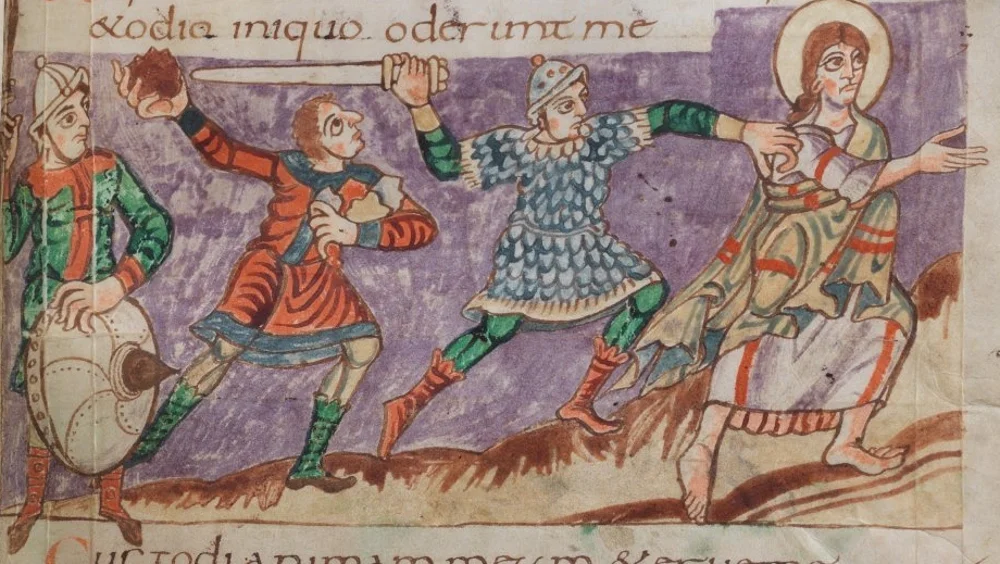
From the 9th to 12th centuries, European arms and armor evolved from Carolingian continuity - itself rooted in Roman traditions - into proto-knightly culture, shaped by Viking raids, feudalism, the Norman Conquest (1066), and the early Crusades (from 1095).
Chainmail (hauberk) became the core of what was considered good protection, expanding in coverage and sophistication, while helmets, shields, and weapons adapted to mounted warfare and changing threats like archery and cavalry charges. Full body armor (by the standards of the 8th century, that is: not full body armor) remained largely something for the elite, with mail hauberks symbolizing status amid growing feudal levies. Length and style of armor changed, though how armor functioned stayed largely the same. As a note, we can observe this also in fashion: while the early middle ages had similar fashion to the late-Roman period except with small changes here and there, from the 10th century onwards a unique fashion style started to develop, and by the late 11th century we can say that there is a uniquely “high-medieval fashion”.
9th Century: Carolingian Standardization and Defensive Responses
How A 9th Century Anglo Saxon Earl Shall Be Armed
In the 9th century, under the Carolingian Empire and amid Viking, Magyar, and Saracen pressures, armor emphasized reliable mail defenses for mounted and foot warriors. The hauberk (or brunia) was typically short-sleeved, waist- to thigh-length, made from interlocking iron rings (often riveted for strength), weighing around 20 - 30 pounds. Charlemagne’s edicts restricted mail export, underscoring its value as high-status gear for professional retainers.
Helmets retained spangenhelm forms - conical or rounded iron skulls with bands, nasal guards, and occasional cheek pieces, providing basic cranial protection. Shields were predominantly round, wooden, central iron boss, and rim fittings for slashing defense.
Weapons prioritized versatility: spears (leaf-shaped heads, often thrown or couched for early mounted use), single- or double-edged swords (pattern-welded blades for flexibility), and axes (broad-bladed for infantry cleaving). Bows and all manners of long knives supplemented.
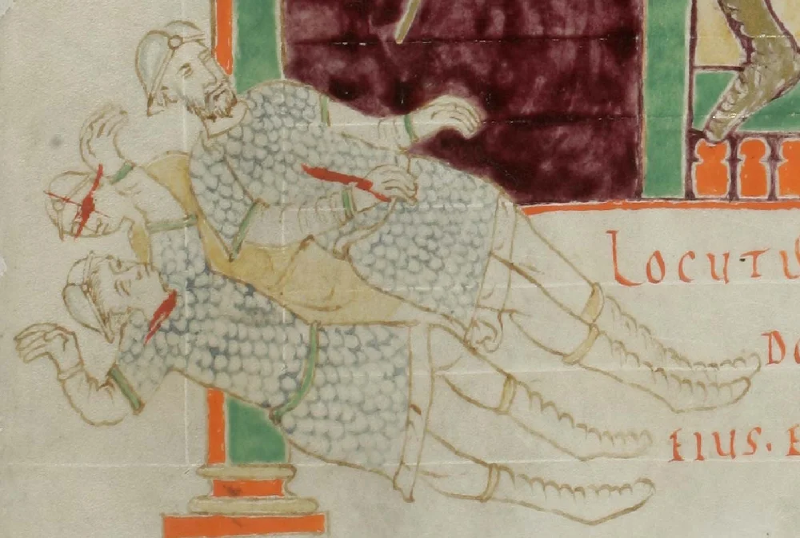
Archaeological evidence includes sparse mail fragments from Norse contexts (e.g., early Danish finds hinting at continued use) and Carolingian grave goods with spearheads and shield bosses. Written sources like capitularies confirm mail prevalence among elites.
10th Century: Norse Influence and Feudal Foundations
How A 10th Century Viking Jarl Shall Be Armed
How A Viking Huscarl Shall Be Armed
The 10th century saw Viking raids accelerate armor adoption across northern Europe, with mail spreading via trade, settlement, and conflict. Hauberks lengthened toward the knees with front/rear slits for mounting, sleeves reaching elbows. Mail coifs (hoods) began appearing, though not universal.
Helmets remained nasal spangenhelms or conical types, sometimes with added aventails. Shields stayed round.
Weapons evolved: swords developed fuller grooves for lightness, T-shaped or brazil-nut pommels; lances gained prominence for couched charges (aided by stirrups, widespread since the 8th - 9th centuries); axes featured longer hafts for reach.
Archaeological evidence is richest from Viking-age Scandinavia: the Gjermundbu mail shirt (Norway, c. 950–975 CE), a near-complete riveted mail hauberk (with possible lamellar elements), found in a cremation grave alongside a helmet. Other finds include mail fragments from Birka (Sweden) and Danish sites (e.g., Bispetorvet pit-house, late 10th–early 11th century, with corroded rings including decorative copper-alloy edging).
11th Century: Norman Ascendancy and Knightly Emergence
How An 11th Century Mounted Knight Shall Be Armed
How An 11th Century Norman Knight Shall Be Armed
How A Norman Noble Shall Be Dressed
How A Saxon Huscarl Shall Be Armed
By the 11th century, mail hauberks became longer (knee-length, long-sleeved to mid-forearm), often with attached coifs and occasional mufflers (mail mittens). Surcoats (cloth, usually silk, over armor) emerged for sun protection, display of status and possibly identification.
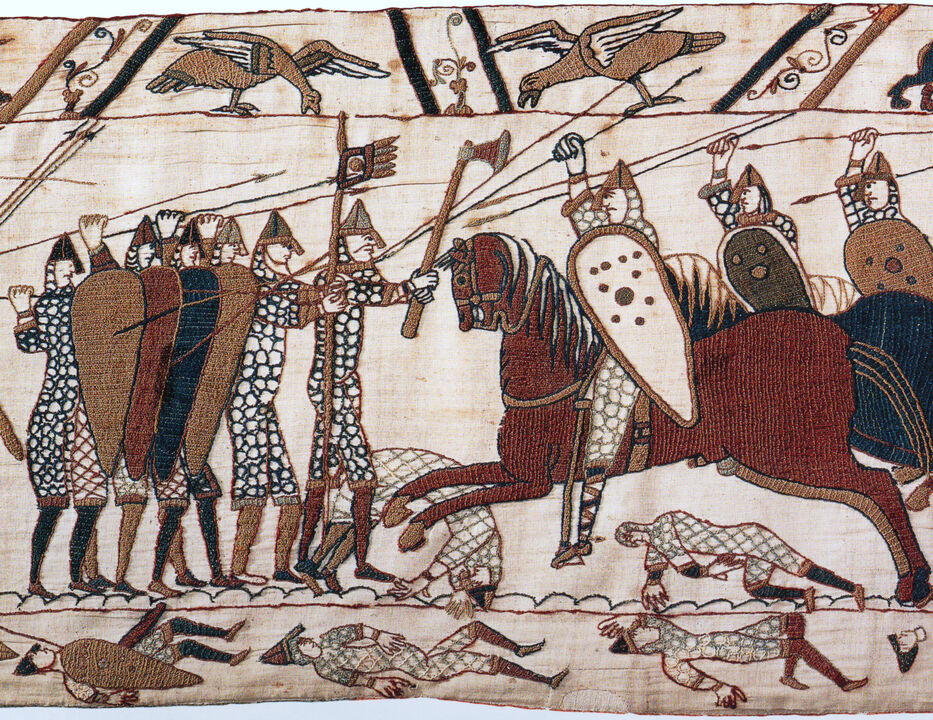
Helmets featured conical nasal types over coifs, as vividly shown in the Bayeux Tapestry (c. 1070s), depicting Norman and Saxon warriors at Hastings (1066). Shields transitioned dramatically: the kite shield (elongated teardrop shape, shoulder to knee, curved for mounted protection) replaced round forms, most likely developed for more protection of the legs and the horse for cavalry, held by guige strap and enarmes.
Weapons included arming swords (longer blades), lances (couched under arm for shock charges), axes (Norse-influenced broad types), bows, Javelins, slings and crossbows (gaining traction).
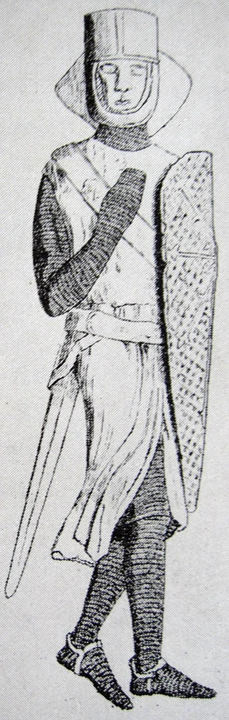
Archaeological evidence relies heavily on iconography like the Bayeux Tapestry (showing hauberks, nasal helmets, kite shields) and sparse metal finds. Maille continuity appears in Norwegian/Swedish graves; Norman contexts yield sword fragments and spurs.
12th Century: Crusader Adaptations and Refinements
How A 12th Century Angevin Chevalier Shall Be Armed How A 12th Century Norman Crossbowman Shall Be Armed
The 12th century refined full mail ensembles amid Crusades and feudal consolidation. Hauberks extended to wrists with mufflers and chausses (mail leggings) protected thighs/calves, either laced or tied.
Helmets shifted toward rounded/cylindrical nasal types, while kettle hats (broad-brimmed) appeared for infantry and great helm precursors (cylindrical, flat-topped with eye slits) emerged late in the century for face protection.
Shields largely remained in kite form (slightly shortened/flattened) but began incorporating some heraldic paintings.
Weapons stayed largely the same, with no radical changes during this period.
By this point, mail armor was about as good as it could get—full-body protection, driven by cavalry tactics, wealth, and craftsmanship. But where do you go from there? The answer: plates.
13th Century: Transitional Armor and Early Plate Experiments
The 13th century marked the decline of pure maille armor partly due to advancements in metallurgy, partly to a continued effort to improve protection against projectiles such as crossbow bolts and arrows, as well as against lances (in the context of heavy-cavalry charges). Hauberks remained full-length (knee to wrist, with coifs, chausses, and mittens). Transitional defenses included coats of plates (metal plates riveted inside fabric/leather surcoats. One of the rare cases where leather wasn’t just used for straps in armor).
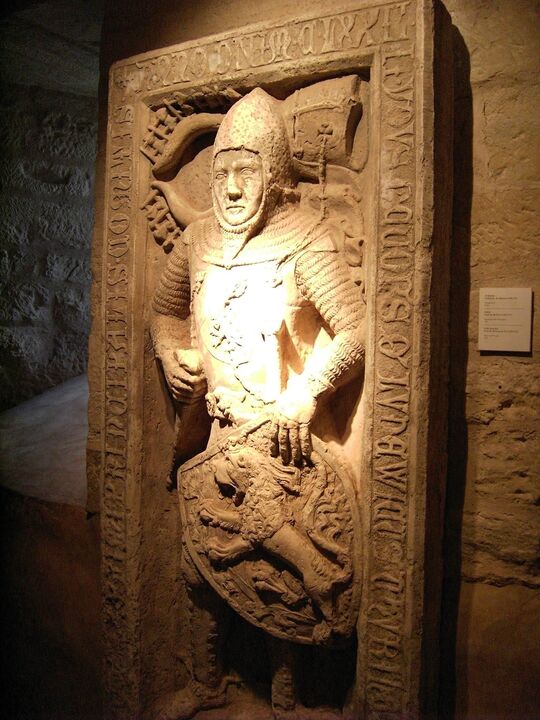
Helmets evolved: the great helm (cylindrical, flat-topped, with eye slits and ventilation) became iconic for mounted knights, worn over mail coifs with skull caps for full-face protection or, also common later on, another helmet. It is speculated that this helmet was used during a cavalry charge to protect against arrows and bolt, splinters and lances, and was removed during combat for better visibility and breathing. This was done by connecting the great helmet with a small chain to the armor.
There were different variations, and stages of development, the pot helmet for example, and different forms but the idea was roughly the same.
Shields shortened from elongated kite to smaller heater or triangular forms. Weapons adapted: swords gained stiffer, diamond-section blades for thrusting; polearms (early halberds, bills) and crossbows proliferated.
Archaeological evidence is limited due to corrosion/recycling, but inventories (e.g., Tower of London 1338 holding 800 “pairs of plates”) and effigies hint at rapid development plate and an equally rapid adoption. Artistic sources (manuscripts, statues and seals) depict early plate limb defenses from ~1250 - 1300.
The 13th and later the 14th century saw a radical change in armor and subsequently, though not as radical, in weapons and tactics.
14th Century: Widespread Plate Adoption and Articulated Defenses
How A Late 14th Century Knight Shall Be Armed
How A Burgundian Archer Shall Be Armed
By the 14th century, plate armor rapidly developed amid warfare demands. Transitional forms dominated early: coats of plates over mail, with articulated leg armor (greaves, cuisses, poleyns for knees) and arm defenses (vambraces, rerebraces, couters). Breastplates appeared as solid pieces by the late century.
Plates during this time were worn over either maille armor or gambeson (Gambeson actually exists now!) as the plate could not fully cover the body yet.
Helmets also changed: bascinets (pointed skull, mail aventail/camail, often with hinged visors like houndskull) replaced great helms - no longer did you have to remove your entire helmet, you could simply move your visor up to see more and improve breathing. Kettle hats (chapel-de-fer, broad-brimmed) suited the common people’s budget.
True hardened steel as opposed to only case-hardened steel (i.e. the full thickness was hardened rather than only the surface) developed by the mid-to-late 14th century: it cannot be stressed enough how much of a difference this made! You could now make thinner plates which were stronger earlier plates.
The book The Knight and The Blast Furnance provides the following data, Joules needed for arrows or bullets to penetrate mild steel (0.15% carbon, akin to basic case-hardened iron post-padding):
| Thickness | Arrow Energy (J) | Bullet Energy (J) |
|---|---|---|
| 1 mm | 55 | 450 |
| 2 mm | 175 | 750 |
| 3 mm | 300 | 1700 |
| 4 mm | 475 | 3400 |
Multiply for each row the energy by 1.5 and you have the energy required for a bullet or arrow to penetrate hardened steel.
Shields diminished slightly in use as two-handed weapons rose; small targes appeared for tournaments. Weapons included longer swords, poleaxes (spike, hammer, axe head), maces (for concussive damage), and early handgonnes (primitive firearms by late century).
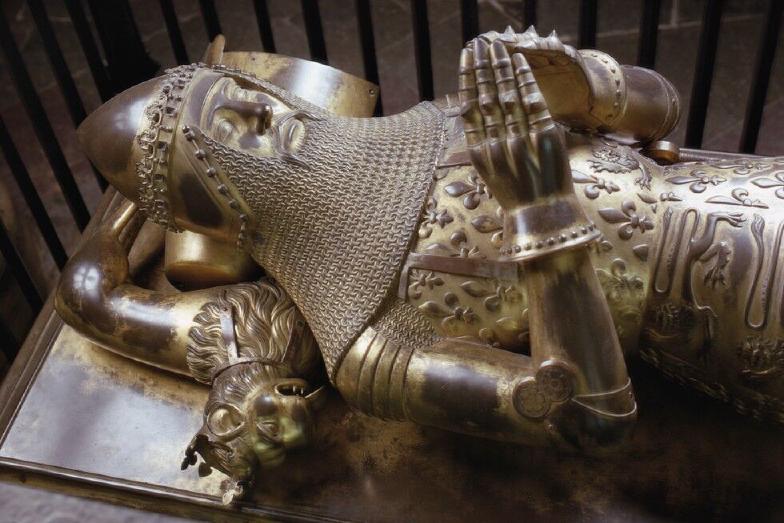
Archaeological evidence includes the Battle of Visby (1361) mass grave (Gotland, Sweden): over 1,000 skeletons with mail, coats of plates (many riveted plates in textile), and limb splints - typical for transitional armor. Effigies and statues show splinted greaves. We have a lot of pieces in museums and of course a plethora of illuminations ins manuscript.
15th Century: Full Plate Armor and Regional Mastery
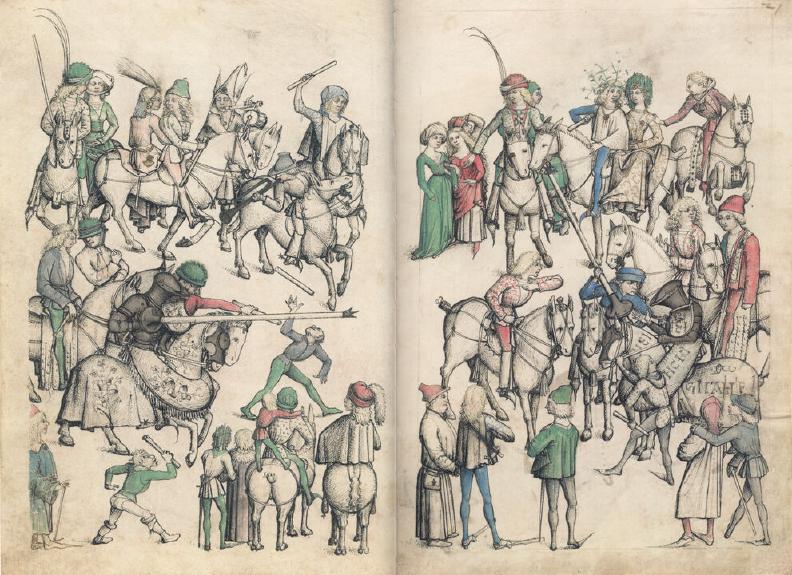
How A 15h c. English Knight Shall Be Armed How An Early 15h c. French Knight Shall Be Armed
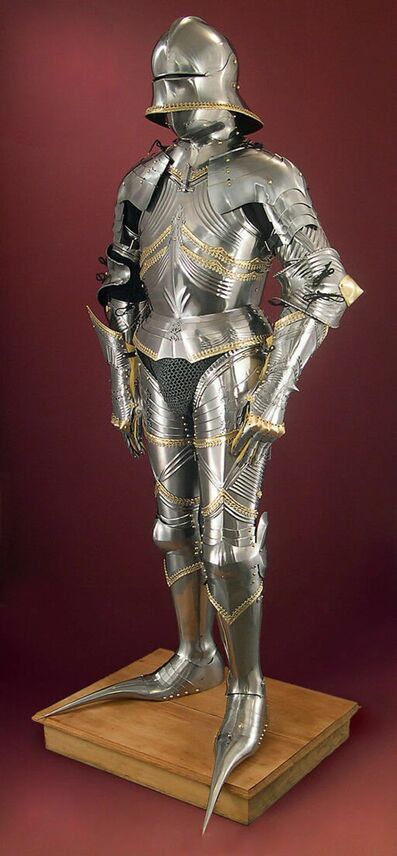
The 15th century achieved full plate armor (head-to-toe articulated steel suits), lightweight (45 - 60 lbs total, distributed), highly mobile via joints/articulations. Maille often protected gaps. Italian mills produced polished “white armor” (smooth, rounded, often asymmetric) while sporting a wide figure; German Gothic style featured fluted ridges for strength and fashion, and favored a thin waist and sleek aesthetic.
There were breastplates with faulds (hooped skirts), pauldrons (shoulder), vambraces/gauntlets (articulated fingers), greaves/sabatons (feet), tassets (thigh plates). Popular helmets were now the sallet (shallow bowl, often visor and bevor neck guard) and the armet (close-fitting, hinged cheek pieces).
The form of the armor itself had a purpose: the round and sleek meant that projectiles and lances would glance of, it’d be difficult to get a good angle to fully transmit the force of an attack into the armor. Breastplates varied in thickness, thicker in the middle around the solar plexus where you’d expect full impact with lances, and thinner at the sides.
Weapons also developed: famous ones like the estocs (thin thrusting swords), zweihänders (two-handed greatswords for anti-pike/mercenary use), polearms (halberds, bills), and matchlock handguns (emerging mid-century). One- and two-handed warhammers became more prominent, partly also since knights no longer needed shields when on foot. Many, and many variations existed of swords, polearms, maces and spears. We have beautiful examples of crossbows with engravings, and heavily decorated metal. This text does not do justice to the artistry of 15th century Gothic and Renaissance weapons and armor pieces.
This era transformed knights into near-impenetrable heavy cavalry (if he already wasn’t), and would remain so despite alleged fire-arms dominance over plate armor.
We have so much art from effigies, small statuettes, art from manuscripts, prints, paintings, frescos and so much more - if you know what to search for you will find an absurd amount of visual sources from this period. It is in some way impressive how few surviving pieces of full plate armor we have considering how much was produced but nonetheless, we can reconstruct fairly accurately what these looked like.
Some Afterthoughts
There are many thing we don’t actually know: how did Norman knights carry their swords when in full maille armor? We know they did but its not obvious from the imagery we have. How was the ventail, the part of a maille coif which goes over your mouth, attached? For some periods and places we know, for some we can only speculate. What did a group of a 100 men in full maille armor fighting with full intent to kill each other look like and sound like? We can only speculate and attempt to recreate that in some safe way…
How varied where some configurations of armor in a single unit of participants in a battle? Difficult to say. Probably fairly diverse but we usually see in illuminations in manuscripts which depict battles and fights the same person, knight, archer, whatever, copied over and over. Did they wear uniform equipment or did the artist only use one model?
I also didn’t go into many experimental pieces. The Kastenbrust emerged in modern-day Germany some time in the early 15th c., and disappeared again. Great Helmet, Pot Helmet, Bucket Helmet, rounded top, flat top, and so on. The 13th and 14th century saw many variations and developments until the sallet, bascinet and similar.
But the fact remains that the middle ages were not some time of stagnancy. Technology improved rapidly, at least from the high middle ages onwards, and hence arms and armor developed. A late Roman member of a comitatus would’ve been quite in awe if he saw a 15th century knight in Gothic plate.
Of course technology wasn’t the only thing that changed. Tactics and strategies shifted over time: Cavalry for the Romans were predominantly skirmishers, with some light shock cavalry, while the high-to-late medieval knight and man-at-arms were often heavy cavalry charging by and into enemy formations, ripping them apart, crushing them or simply lowering their moral by their sheer presence (imagine 200 men clad in steel from head to toe, covered in silk, embroidery and decorations you’d never be able to afford, on horses charging towards you, the ground shaking and the air vibrating with a thunderous bass sound. Maybe the turn in a large u-turn, as they often did, but maybe on the n-th repetition of this they charge as they see a demoralized gap in your formation).
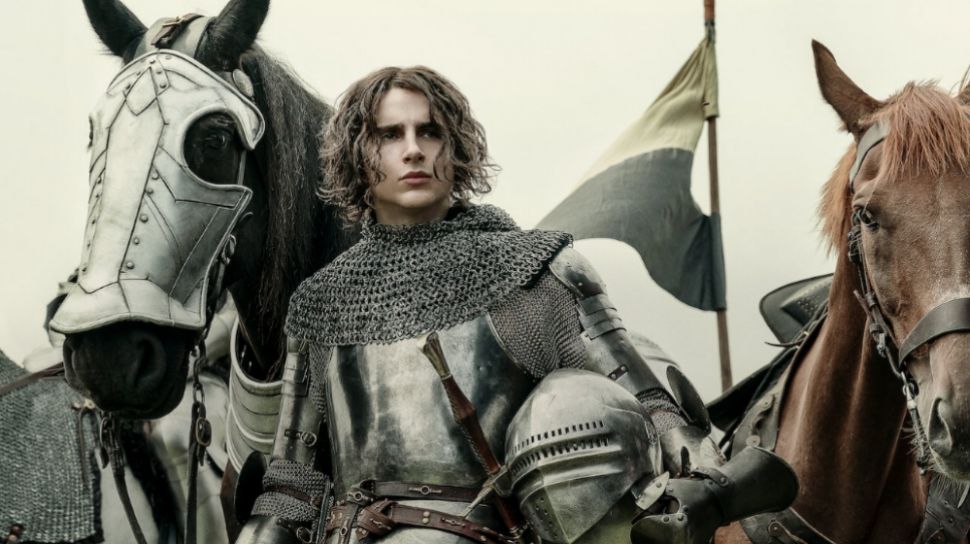
It is hence quite sad how battles and knights are depicted in series, movies and documentaries. Cheap leather (as if that’d stop a lance, a bolt or even a strong thrust with a spear), formless or bulky plate, thin maille which hangs loose on the wearer, no grandeur, nor gravitas. The average man often armed with swords which would’ve been quite expensive until the 14th century, their shields colorless, their helmets rusty…
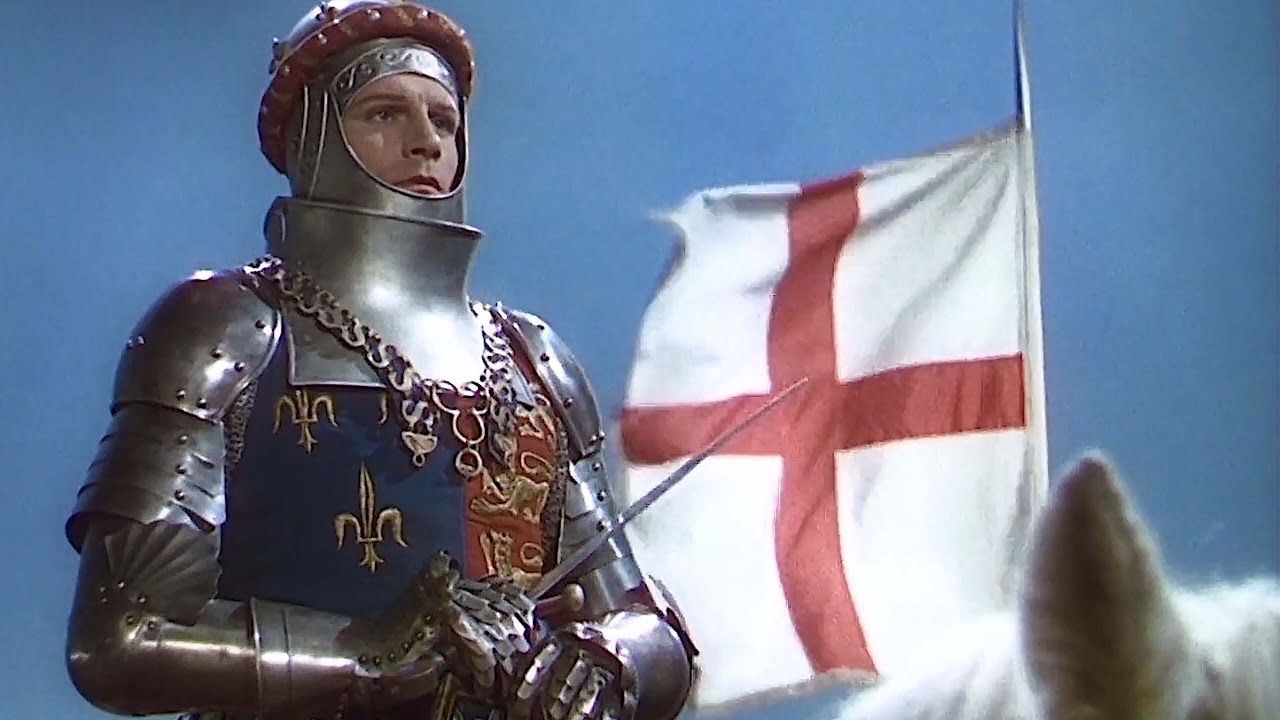
Henry V from 1944 managed to catch the aesthetic of the hundreds years war (except when showing the French and don’t look too closely at the common folk in the background) despite material rationing due to WW2, yet modern productions can’t even put some roundings and form in the.
Some Links to Look At
A collection of videos and publicly available information to read up on, or look at, armor and weapons.
Videos:
- Evolution Of Knight’s Armour - A Guide For Americans
- Putting the Middle Ages in Perspective
- Arms and Armour: Part 1 Medieval Weapons
- Arms and Armour: Part 2 Medieval Armour
- Arms and Armour, Part 3: Medieval Helmets
- Dr Tobias Capwell: Building Medieval Plate Armor An Operator’s Guide
- Unit 6: The Early Middle Ages
- Lecture13 Early Medieval Part1
- The OTHER Vikings: Baltic Burials that DEFY Convention
- Ich zeige eine realistische Rüstung!
- Vom Ringpanzer zum Plattenharnisch - Die Rüstungsrevolution im 14. Jahrhundert
- Rüstung im Mittelalter
Texts:
- The Introduction and Development of Plate Armour in Medieval Western Europe c. 1250-1350
- Arms & Armor (Clemson University)
- The Evolution of Medieval Armor: Maille, Leather & Plate
- Arms_and_Armor in Medieval Europe (The met)
- MEDIEVAL ARMS, ARMOR, AND TACTICS
- Medieval Arms_and_Armor
- Clad in Steel: The Evolution of Armor and Weapons in Medieval Europe
- Oakshott Typification
- Oakshott Typification Wikipedia
- Helm und Ringschwert - Prunkbewaffnung und Rangabzeichen germanischer Krieger : eine Übersicht
- Evolution of Medieval Armor
- The Function of Armor in Medieval and Renaissance Europe
- Medieval Warfare Armor and Shield
- Pinterest: Late Medieval Armor
Maybe a bit less accessible but still, for those interested, here are some book:
- Arms & Armor of the Medieval Knight: An Illustrated History of Weaponry in the Middle Ages (David Edge)
- European armour, circa 1066 to circa 1700 (Claude Blair)
- How to Read European Armor (Donald J. LaRocca)
- The Knight and the Blast Furnace (Alan Williams)
- Osprey Men at Arms Series (Multiple Authors)
- The Wars of the Roses: The Medieval Art of Graham Turner (Graham Turner)
- Armies of the Dark Ages (Ian Heath)